Project background
The Nairobi River flows through some of the most densely populated parts of the city, including Kawangware, Kangemi, Kibera and the CBD. Rapid urbanisation, waste dumping, sewage discharge and deforestation along its banks have severely degraded the river ecosystem. Loss of tree cover along the riverbanks has led to soil erosion, flooding, pollution concentration, biodiversity loss and poor living conditions for the communities who live beside it.
Why riverside trees matter
Trees and bamboo planted along a river, known as a riparian buffer, do several jobs at once. Their roots hold the bank together, so heavy rain washes away less soil. They slow and soak up runoff, which reduces flooding downstream. They trap some of the silt and pollutants flowing towards the water, give shade that keeps the stream cooler, and provide habitat for birds, insects and small animals. For people nearby, a green river corridor also makes the neighbourhood safer, cleaner and more pleasant.
How the project works
The project combines three kinds of activity, all led from within the community:
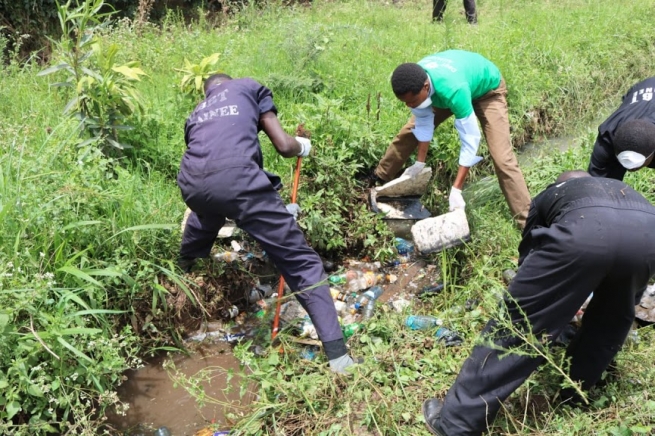
- Planting. Indigenous trees and bamboo are planted along the Kawangware stretch of the river, with clean-up days to clear waste from the banks before and during planting.
- A youth-run nursery. A community tree nursery produces about 10,000 seedlings a year, so the project has a steady supply of locally suited plants and creates skills and income for young people.
- Training and awareness. About 200 community members and youth volunteers are being trained on conservation, environmental protection and waste management, so the restored riverbank stays protected after the planting days end.
Looking after what we plant
The riverbank is a hard place for a young tree: waste, trampling and flooding all take their toll. Local ownership is the best protection we have. By training residents and volunteers and by involving neighbours in clean-ups and planting, we are building a group of people who will watch over the trees long after the first season.
How you can help
A gift to this project pays for seedlings, tools, training sessions and clean-up days. You can donate to this project, join us on a clean-up and planting day as a volunteer, or get in touch if your organisation would like to partner with us.