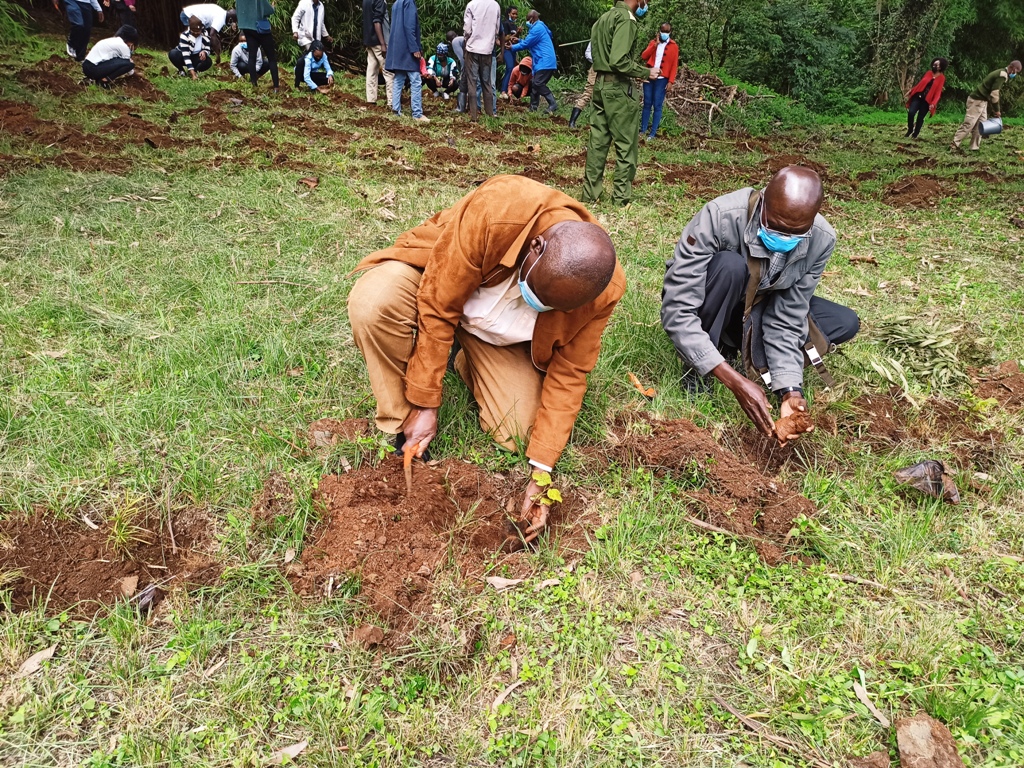
Land that has lost its trees loses a great deal more than shade. Soil washes away in the rains, streams fill with silt, birds and pollinators move on, and the families who depend on that land find it harder to farm, graze and collect water. Our Environmental Restoration program exists to reverse that slide, one planting at a time.
What we do
We promote tree planting and ecosystem rehabilitation across degraded landscapes. That includes riverbanks and urban green spaces in and around Nairobi, and grasslands in pastoral areas, where restoring ground cover improves both biodiversity and the livelihoods of the people who live there. Alongside every planting we run community awareness sessions, so the people who live beside the trees understand why they matter and feel responsible for them.
Planting is only the first step
A tree in the ground is not yet a tree that survives. Many planting drives fail because seedlings are put out and then forgotten. We try to plan the follow-up before the first hole is dug: choosing species that suit the soil and rainfall, planting at the right time of year, and agreeing with neighbours, schools and local groups who will water and protect the young trees afterwards.
- Indigenous first. Native species support local birds, insects and soil life far better than imported ones.
- Right tree, right place. Our tree research helps us match species to sites rather than planting whatever is available.
- Our own seedlings. A community tree nursery gives us a steady supply of seedlings and a chance to train young people in nursery work.
Where it connects
Restoration is the thread running through the rest of our work. The Nairobi River restoration project is a large-scale example, and our Schools Greening Program brings the same idea into school compounds. To date our teams and volunteers have planted more than 11,000 trees.
How you can help
You can sponsor seedlings with a donation, join a planting day as a volunteer, or talk to us about restoring a degraded site near you through our contact page.