Communities in and around Nairobi are already living with a changing climate: less predictable rains, hotter spells, and flooding where tree cover and open ground have disappeared. Understanding what is happening, and what can be done about it, is the first step towards coping with it.
Practical, local training
We educate communities on climate change mitigation and adaptation strategies. Our sessions are practical rather than theoretical. They cover how trees, soil and water work together, what resilient farming looks like on small plots, and how everyday choices about waste and land affect the neighbourhood.
- Raising awareness on environmental sustainability in plain, local language.
- Resilient agricultural practices that help households protect their harvests and income.
- Empowering local leaders to design and run innovative solutions that reduce climate risks in their own areas.
Working with young people
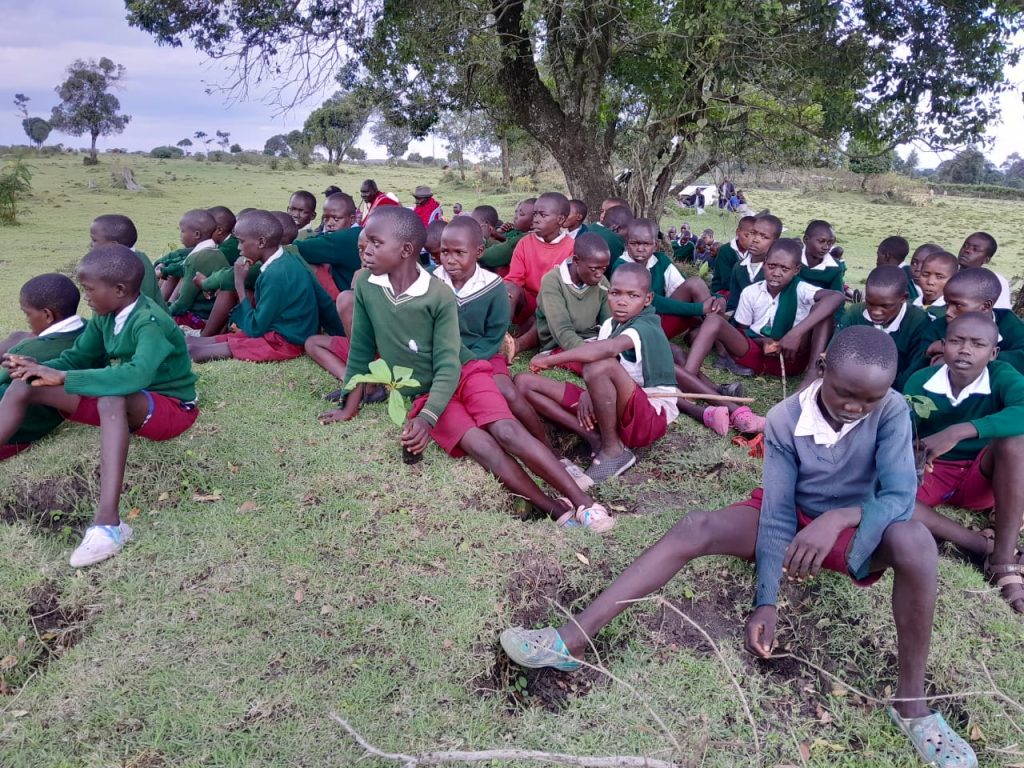
Much of our team and many of our volunteers are young. We see young people as the most important audience for climate education: they will live with the consequences longest, and they are often the ones with the energy to act. Our sessions in schools and community groups give them the knowledge to take part in planting, nursery work and local decision-making.
Education that leads to action
Learning is most useful when it leads straight to something practical. That is why climate education sits next to our planting and restoration work: participants can join a planting day, help in the nursery, or take part in a volunteer activity soon after a session. Over 600 people have been through our education activities so far, and we want that number to keep growing.
Would your school, church, youth group or neighbourhood association like a session? Contact us and we will talk about what would suit your group.