October 12, 2026 ·Miyetu Tree Foundation ·Projects
For many people in Kawangware, the Nairobi River is not a scenic feature. It is the stream behind the houses, a place where rubbish piles up, where heavy rains bring flooding, and where the banks crumble a little more every year. It is also, with the right care, one of the most promising places in the city to restore.
What went wrong
The Nairobi River flows through densely populated areas including Kawangware, Kangemi, Kibera and the CBD. As the city has grown, the river has taken the strain: waste dumped along the banks, sewage discharged into the water, and trees cleared from the riparian zone, the strip of land beside the water. Without roots to hold the soil, banks erode. Without vegetation to slow the rain, runoff rushes into the river and floods surrounding homes. Pollution becomes more concentrated, wildlife disappears and living conditions decline.
The plan
Our Nairobi River Riparian Restoration Project is a twelve-month effort on the Kawangware stretch of the river, aiming to restore and rehabilitate degraded sections through tree planting, environmental education and community-led conservation. Its key targets are:
- 5,000 indigenous and bamboo trees planted along the riparian zone.
- 10,000 seedlings produced each year through a community tree nursery.
- 200 community members and youth volunteers trained on conservation.
- Better soil stabilisation and less erosion.
- Greater awareness of environmental protection and waste management.
Why indigenous trees and bamboo?
Indigenous trees are adapted to local rainfall and soils, and they support local birds, insects and other wildlife far better than imported species. Bamboo grows quickly and forms a dense network of roots, which makes it excellent at binding unstable riverbanks while the slower-growing trees establish. Used together, they protect the bank sooner and build a richer habitat over time.
The hard part is what comes after
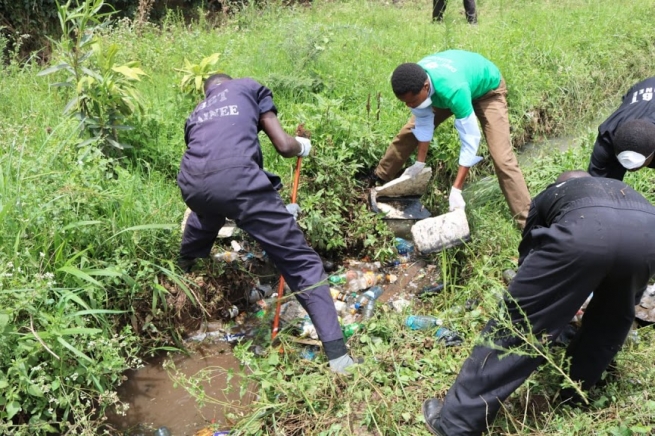
Anyone can plant a tree on a planting day. Keeping it alive beside a busy urban river is the real challenge: waste, trampling and flooding all take their toll. That is why the project invests so heavily in people. Training residents and volunteers, running clean-ups, and involving neighbours means there is a community ready to look after the trees after the cameras and visitors have gone home.
What residents can do right now
You do not have to wait for a planting day to help the river. Small everyday choices add up, and many of them cost nothing:
- Keep waste out of drains and away from the riverbank, and encourage neighbours to do the same.
- Join a clean-up day as a volunteer, or organise one with your street, church or youth group.
- If you have land beside a stream or drain, plant indigenous trees or bamboo along it rather than leaving it bare.
- Talk to children about where rubbish goes, and why the river matters.
Why this matters beyond Kawangware
A river does not stop at the edge of one neighbourhood. What happens on the Kawangware stretch affects the communities downstream, from erosion and silt to the quality of the water. Restoring even one section shows what is possible, and it builds skills and local experience that can be shared with other communities along the river.
What success looks like
If the project does what we hope, the riverbank will be a living, green corridor with improved biodiversity, less flooding and erosion in the targeted areas, better living conditions for Kawangware residents, and a community equipped with conservation skills and knowledge. You can read the full project page, donate to this project, or join a clean-up and planting day.