October 5, 2026 ·Miyetu Tree Foundation ·Research
Planting a tree sounds like the easy part of conservation. In practice, a large share of planted trees never make it to maturity, often because the wrong species was put in the wrong place. At Miyetu Tree Foundation we study tree species so that our planting, and the planting of the schools and communities we work with, is based on evidence rather than guesswork. Here is a look at three trees from our research.
African Mahogany
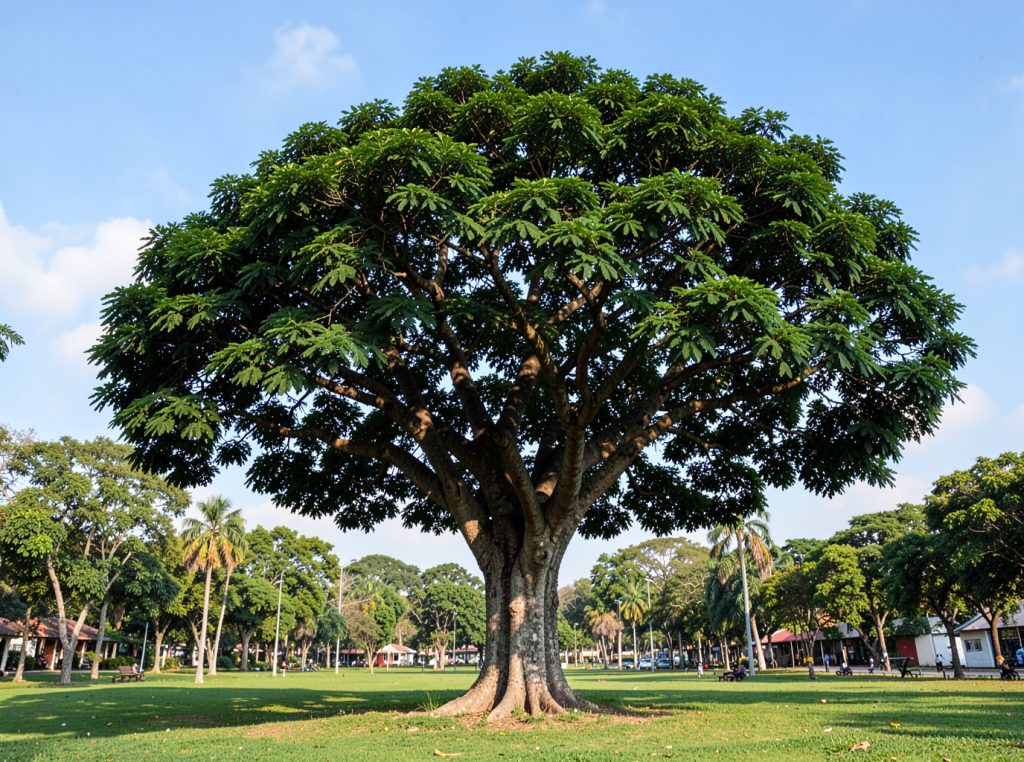
This study looked at growth patterns, survival rates in urban environments, and the ecological value of the African Mahogany. In our observations, its average survival rate was about 82% after two years, which is encouraging for a tree planted in a city. It improves soil quality, helps reduce urban heat and supports pollinators and wider biodiversity. It does best in well-drained soils with moderate sunlight, so it is a good candidate for parks, compounds and open ground, but a poor choice for waterlogged spots.
Jacaranda
Jacaranda mimosifolia is widely planted along streets and campuses and is famous for its purple flowers. Our study found it to be highly adaptable to the Nairobi climate, with moderate water requirements. It attracts bees and other pollinators and improves the look of urban streets. It is a fine choice where beauty and shade matter, though as with any tree it is worth checking space for roots and branches before planting near buildings and drains.
Grevillea
Grevillea robusta is a fast-growing tree widely used in urban greening and in agroforestry, where trees are grown alongside crops. In our research it reduced urban heat and improved air quality, supported birds and small wildlife, and showed a high survival rate in well-drained soils. It can reach up to 20 metres in height, which is something to plan for. Fast growth is a strength in a young planting, but a tall tree needs room.
What these results teach us
- Drainage matters. All three trees do well in well-drained soil. Planting in the wrong spot is the quickest way to lose a seedling.
- Think about the full-grown tree. A seedling that is a metre tall today may be twenty metres tall in a few decades.
- Diversity is safer. A mixture of species is more resilient to pests, disease and changing weather than a single type.
- Follow-up decides survival. Even the best-suited species needs watering and protection in its first seasons.
A simple checklist before you plant
- Look at the site. Is the soil well drained or does water stand there after rain? How much sun does it get?
- Look up as well as down. Check for power lines, buildings and drains, and think about how large the tree will become.
- Choose a species to match. Use the findings above, or ask us for advice.
- Plant at the right time. Planting at the start of the rains gives seedlings the best chance of establishing.
- Plan the aftercare. Decide in advance who will water and protect the tree.
Common mistakes to avoid
- Planting too close to buildings or drains, where roots can cause damage later.
- Planting everything in one species, which leaves the whole planting exposed to a single pest or disease.
- Choosing a tree because it is available or cheap rather than because it suits the site.
- Forgetting the first dry season, when many young trees are lost.
Putting the research to use
Our work to date includes studies on trees in several settings and across two research sites. We use the findings to choose what goes into our nursery and to advise schools and community groups on what to plant. You can read a summary of the research findings, see how they feed into our programs, or ask us for advice on what to plant on your own land.